Posts

The Blue Grass Prairie

Image
GOING NATURE’S WAY By Kate Crowley This cool and mostly wet summer was exactly what our tall grass prairie has been waiting for.  It has been years since the big bluestem grasses towered over our heads, but now when we walk the trail along the three sides of the prairie, we feel as though we’re walking in a tunnel.  Who needs a corn maze? We could make a grass maze very easily if we wished, but instead we will leave the two acres intact and just admire its beauty from the sides.  Besides the weather, it seems likely that burning the section of the field this past spring gave it a boost, especially when we compare it to the other third, which we did not burn.  There is a distinct difference in size and density of the two tracts. Before the arrival of people lightning strikes were the main cause of prairie fires and also an important part of their life cycle.  Fire reduced plant litter and helped to replace minerals and nutrients in the soil.  Once t...

Pelicans on the Mississippi

Image
WINGIN’ IT By Kate Crowley Oh, a wondrous bird is the pelican! His bill holds more than his belican. He can take in his beak Enough food for a week. But I’m darned if I know how the helican... Dixon Lanier Merritt This limerick, while a bit of an exaggeration (pelicans eat about three pounds of food a day) is a good description of the surprising qualities of this very larger waterfowl.  We observed and enjoyed seeing large numbers of pelicans last week as floated down the Mississippi River on a Paddlewheel.  Many of them were seen in along the Upper Mississippi National Wildlife Refuge which begins at the confluence of the Chippewa River in Wisconsin and extends down to Rock Island, Illinois, covering just over 240,000 acres and extending 261 river miles.  This Refuge was first established in 1924 to protect floodplain habitat necessary for the survival of fish, wildlife, plants and migratory birds. White pelicans weigh more than 10 pounds and have such...

Vireos, blue jays and loons

Image
WINGIN’ IT By Kate Crowley There is nothing more satisfying and rewarding for a writer than to hear from someone who read something you’ve written and enjoyed it.  It is rare to get this kind of feedback, and maybe that is what makes it all the more special. Over the past 20 plus years I have written hundreds of articles for the local newspapers, hoping to both entertain and educate readers about nature, whether that be birds, bugs or boreal forests (and everything in between or within).  Sometimes the feedback includes personal stories or experiences which I enjoy hearing too. This past week, I stopped in at T&M Sports and owner Tom Brabec asked about our bluebirds.  This meant he had read my most recent article. This led Tom to tell me about the bluebirds that had nested at his lake place and how the nest had fallen out of the box (after he had already replaced it once).  When it fell out the second time, the young birds, who were apparently ready to f...

Summer

Image
GOING NATURE’S WAY By Kate Crowley For all the Minnesotans who barely made it through this past winter and long, chilly so called spring, the month of July may very well be what you’ve been waiting so long for.  Both heat (and humidity), historically, reach their peak in this month.  It is not unusual to reach the high 90s and even 100 if you factor in the dew point (heat index).  Personally, this is NOT my kind of weather, but I will try not to be a scrooge and deny others their joy at being able to sweat profusely and apply sunblock over all their exposed skin.  For me, the joy of July comes from the abundance of life all around us (except for the flies and mosquitoes). If ever there were a summer where the world looks lush, this is it.  One of the flowers that is in bloom right now, in great profusion along roadsides of the North Country, is the lupine.  I admit I have Lupine jealousy. In the hill country of Texas they brag about their bluebonne...

Bluebirds

Image
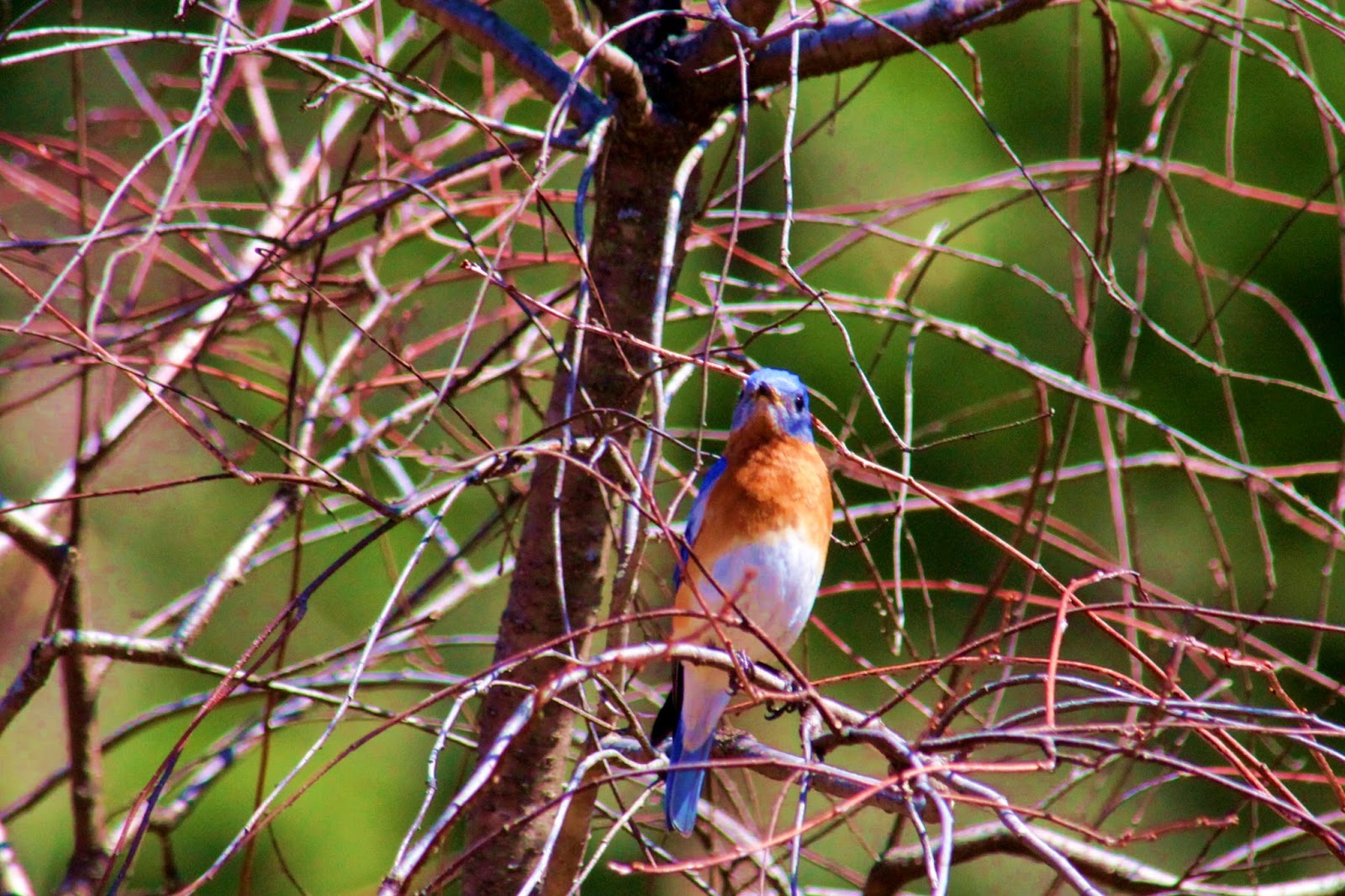
WINGIN’ IT By Kate Crowley We were beginning to think that we might not have any resident bluebirds this summer.  We heard a male singing earlier in June, but then he vanished.  Their chirrupy call is one my ears catch quickly, especially when it hasn’t been heard for eight months.  It is a call that immediately illicit the word, ‘bluebird’ from both Mike and I.  The eastern bluebird is a conservation success story.  In the first half of the 20 th century they were common birds across the eastern U.S., especially around farmlands, since they prefer open spaces to nest and hunt for food.  At that time people used wood fence posts around their farmsteads and fields.  These naturally rotted and provided excellent nest cavities for this small relative of the robin. Aging trees with cavities created by woodpeckers also were favored by bluebirds. But by mid-century, it is estimated that the bluebird population had reached a point of 90% decline. Ti...

Little wings

WINGIN’ IT By Kate Crowley There are so many wings in motion that you can hear them.  They make an extremely annoying whining sound as they fly closer and closer, usually just as you’re falling asleep.  Maybe we say it every year, but I bet you have said it more often or heard it this year.  The mosquitoes are horrendous!  I don’t think it’s an exaggeration really.  For those of us living in rural areas they are an unpleasant fact of life in early summer (this is a big reason you won’t hear me or my husband complaining about winter).  In the Twin Cities they institute spraying programs to try and control these annual pests, but that is impossible when you live surrounded by forests, ponds and assorted wetlands.  Surprisingly, mosquitoes don’t breed in lakes. This cool, late, wet spring/early summer has been ideal for the production of these insects.  Every time it rains a new brood of mosquitoes is produced.  They can go from egg to ad...

Indigo Bunting

Image
WINGIN’ IT By Kate Crowley For a bird lover, June is like a tempting buffet – or maybe I should say smorgasbord, considering where we live. And at this time of year, we are ravenous, with eyes and ears having been starved by the long and scarce winter rations.  Now there are so many beautiful and melodic sights and sounds that I find it hard to choose which to share with you.  So I will make a compromise and talk about one colorful species and a few of the songs we’re hearing. Many of the birds who return this way each spring come from the tropics and not surprisingly they come arrayed in colorful plumage – far more extravagant than that which our resident birds wear. (The one exception being the American goldfinch).  Baltimore orioles, scarlet tanagers, rose-breasted grosbeaks are just a few of the obvious arrivals arrayed in flashy red and orange feathers.  But there is one small bird that is equally impressive when you see it in the right light.  Tha...